The design process starts with a detailed site investigation—trial pits in accessible areas, dynamic probes where access is tight, and rotary drilling to confirm bedrock depth across the granite ridges that run through Aberdeen. Shallow foundations in this city rarely follow a generic prescription. The ground shifts character within a few hundred metres: dense sandy till near the harbour, weathered granite on the slopes above North Deeside Road, and pockets of soft alluvium along the River Don floodplain. Our approach combines field data from borehole logs with laboratory strength testing on undisturbed samples, feeding directly into bearing capacity models under Eurocode 7 Design Approach 1. For sites on the more variable tills we often specify a footing investigation programme to map lateral variability before finalising foundation dimensions.
Granite bedrock in Aberdeen can sit at 0.5 metres or 15 metres—every site needs its own bearing stratum diagnosis.
Our approach and scope
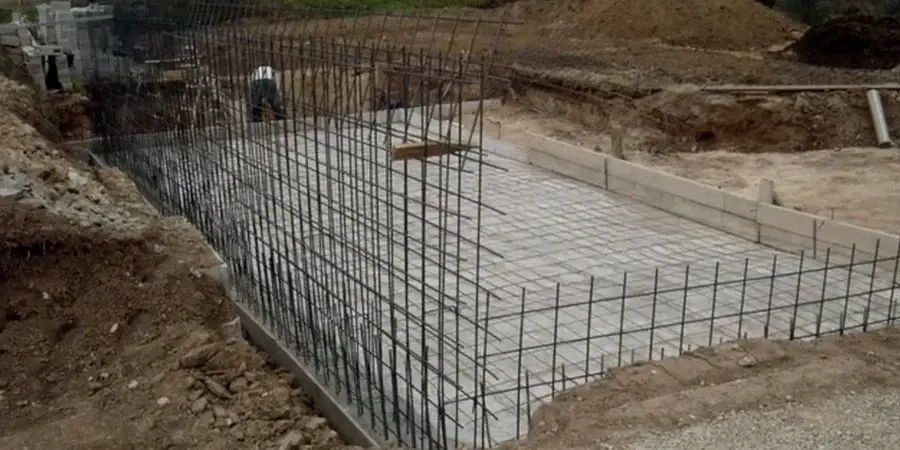
Site-specific factors
Aberdeen's glacial till contains lenses of soft clay and silt that can compress significantly under load, producing differential settlement that cracks masonry within the first five years. The hazard is acute on the sloping sites common in the west end, where a shallow foundation on one side of a building can bear on granite while the other side sits on three metres of weathered till. Frost action in the upper 450 mm is another local risk—particularly in exposed locations like Kingswells and Westhill where winter ground temperatures stay below zero for extended periods. Undetected boulders within the till matrix can also mislead a dynamic probe refusal, giving a false impression of rockhead at shallow depth. Our designs always include a minimum investigation depth of 1.5 times the foundation width plus an assessment of frost susceptibility per NHBC Standards Chapter 4.2.
Service video
Regulatory framework
BS EN 1997-1:2004 (Eurocode 7: Geotechnical design), BS 5930:2015 (Code of practice for ground investigations), BS 8500-1:2015 (Concrete – complementary to BS EN 206), NHBC Standards Chapter 4.2
Complementary services
Standard bearing capacity design for residential plots
Strip and pad foundation sizing for single dwellings and small extensions across Aberdeen city and shire. Includes EC7 Design Approach 1 calculations, settlement checks, frost protection depth specification, and a signed design statement for Building Control submission.
Raft and stiffened raft design for difficult ground
Full raft foundation analysis for sites with soft alluvial pockets, variable till, or high water table—common in the lower Don valley and coastal fringes. We use finite element modelling to assess soil-structure interaction and produce reinforcement schedules ready for construction.
Typical parameters
Common questions
What depth of ground investigation is needed before a shallow foundation design in Aberdeen?
We follow BS 5930:2015 guidance, typically requiring boreholes or trial pits to at least 1.5 times the anticipated foundation width below formation level. In Aberdeen's glacial till, we often extend this to 5–6 metres where soft lenses are suspected, and to rockhead confirmation where granite is expected within the influence zone.
How much does a shallow foundation design package cost for a single house?
A complete design package—including bearing capacity calculations, settlement analysis, frost protection specification and a Building Control submission document—typically falls between £1,680 and £2,660 depending on ground complexity and the number of foundation elements. The price assumes an investigation report is already available.
Do you handle Building Control submissions for Aberdeen City Council?
Yes. We prepare full design statements and calculation packages that meet the requirements of Aberdeen City Council Building Standards and the Scottish Building Standards Technical Handbook. Our submissions include EC7 justification, ground model interpretation, and construction recommendations.
What is the typical allowable bearing pressure for Aberdeen's soils?
It varies significantly: on competent granite bedrock we can adopt prescriptive values of 2000–4000 kPa; on dense glacial till, serviceability settlement usually limits the allowable pressure to the 200–400 kPa range. Every site needs its own assessment—there is no single safe figure for the city.