In Aberdeen we rarely see a clean site. Most of the time the top layer is made ground from Victorian quarries or old ash fill from the fishing industry. Underneath that you have the Water of Don alluvium or the sticky, grey boulder clay that holds moisture like a sponge. This means conventional shallow footings often fail the serviceability checks. We specify raft foundation design because it bridges the soft spots. Before we size the mat we always correlate the results from test pits to map the fill thickness and check for buried granite setts that disrupt the bearing stratum. The geotechnical report then defines the modulus of subgrade reaction for the structural team.
A raft foundation in Aberdeen is a rigid box. We tune the settlement profile using the actual k-value from the field test, not the textbook.
Our approach and scope
Site-specific factors
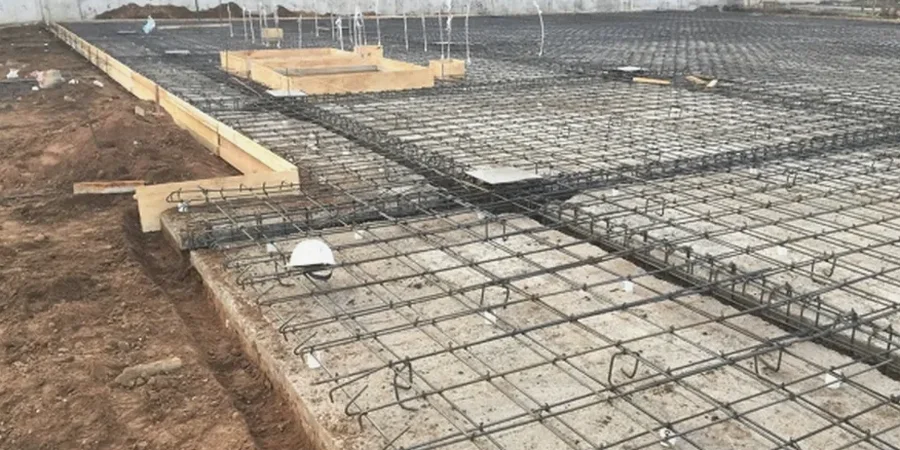
Eurocode 7 requires a GEO ultimate limit state check. In Aberdeen the biggest variable is the groundwater recovery. Many old granite quarries were backfilled and the water table now sits just 1.5 metres below the surface. If the raft is not designed with a proper drainage blanket, the hydrostatic uplift pressure will crack the slab at the column connections. We have seen this in Crown Street projects. The second risk is differential settlement at the interface between the till and the alluvial deposits. We model the raft as a flexible plate and specify a ribbed beam grid to stiffen the section. Ignoring the lateral variability of the glacial deposits leads to rebar congestion and costly remedial grouting later.
Regulatory framework
BS EN 1997-1:2004 (Eurocode 7, Geotechnical design), BS 8004:2015 (Code of practice for foundations), BS 8500-1:2015 (Concrete – complementary to BS EN 206)
Complementary services
Geotechnical interpretative report
Combines SPT data and lab classification to define the design soil profile. We identify the critical section across the building footprint.
Raft FE modelling
We build a Winkler spring model with variable k-values. The output includes bending moment envelopes, shear force diagrams, and the required steel ratio per zone.
Settlement and heave analysis
We run immediate and consolidation settlement calculations. If the site has mature trees, we include a clay heave assessment per NHBC Chapter 4.2.
Typical parameters
Common questions
What is the typical cost range for a raft foundation design package in Aberdeen?
For a standard residential to mid-rise commercial building in the city the design fee ranges from £770 to £3,710. The final figure depends on the complexity of the ground profile and the number of load combinations to verify.
How do you account for the granite bedrock near the surface?
We map the rockhead contour using dynamic probing or rotary core drilling. If the rock is within two metres of the raft soffit we specify a compressible layer to prevent hard spots that cause unwanted stress concentration and slab cracking.
Does the raft design include the drainage system?
Yes, the design always includes a sub-raft drainage blanket and perimeter French drain detail. This is critical in Aberdeen to relieve hydrostatic pressure on the slab, especially in the winter months when the groundwater reaches its peak.