Ground improvement represents a critical geotechnical discipline in Aberdeen, encompassing a suite of techniques designed to enhance the engineering properties of soils and rocks to support construction loads safely and durably. In a city built on a complex geological legacy, from the granite bedrock that defines its skyline to the compressible alluvial deposits along the River Dee and Don valleys, the need to mitigate risk and optimise foundation solutions is paramount. This category covers the full project lifecycle, from initial site investigation analysis and feasibility studies through to detailed design, specification, and validation testing of methods like deep soil mixing, rigid inclusions, and dynamic compaction. For a region experiencing significant urban regeneration, harbour expansion, and energy transition infrastructure projects, ground improvement is not merely an option but often the fundamental enabler of viable and sustainable development.
Aberdeen's subsurface conditions present distinct challenges that make ground improvement a frequent and necessary consideration. The city is famously underlain by the Aberdeen Granite, a hard and durable but often irregular and weathered rock mass. However, the immediate coastal lowlands and river corridors are characterised by thick sequences of Quaternary deposits. These include glacial tills of variable stiffness, post-glacial sands and gravels, and most critically, soft, compressible silts and clays with high organic content. These softer soils are prone to significant long-term settlement and have low bearing capacity, making them unsuitable for direct foundation support without treatment. The presence of high groundwater tables in these areas further complicates excavation and construction, demanding solutions that improve the ground in situ.
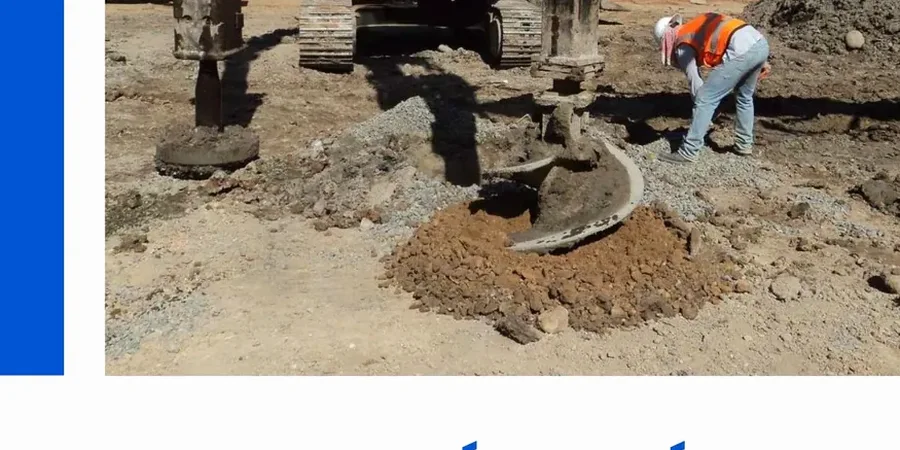
The application of ground improvement in the UK, and specifically Scotland, is governed by a robust framework of standards. The cornerstone is BS EN 1997-1:2004+A1:2013 (Eurocode 7: Geotechnical design – General rules) and its UK National Annex, which mandates a limit state design philosophy. This is complemented by BS EN 1997-2:2007 (Ground investigation and testing) and a suite of execution standards, most notably BS EN 14731:2005 for deep vibration techniques, which directly informs the design of vibrocompaction design. For methods like stone columns, the design is guided by the principles of BS EN 1997 and detailed in specialist documents such as the CIRIA C572 guidance. All designs must rigorously consider soil-structure interaction, durability, and the effects of construction vibrations on adjacent assets, a particularly sensitive issue in Aberdeen's historic city centre.
The types of projects in Aberdeen that routinely require ground improvement are diverse and economically vital. The ongoing redevelopment of the harbour front, including the Aberdeen South Harbour expansion, involves heavy quay wall structures and cargo laydown areas over potentially liquefiable sands and soft marine clays, often necessitating deep vibro-techniques and stone column design for load-bearing and settlement control. The energy sector, supporting a mix of traditional oil and gas and a rapidly growing offshore wind industry, demands robust foundations for storage tanks, turbine blade manufacturing facilities, and onshore cable routes across challenging terrain. Residential and commercial developments on former industrial 'brownfield' sites, particularly along the river valleys, consistently require solutions to address made ground and natural soft spots, ensuring that new structures from low-rise housing to multi-storey buildings are founded safely and economically.
Available services
Common questions
What is the primary purpose of ground improvement in civil engineering?
The primary purpose is to modify the in-situ ground to enhance its engineering characteristics, such as increasing bearing capacity, reducing total and differential settlement, accelerating consolidation, and mitigating liquefaction potential. This is achieved through mechanical, hydraulic, or chemical means, creating a safe and serviceable foundation for structures without the need for deep foundations or complete soil replacement, which is often impractical or uneconomical.
How do I know if a site in Aberdeen requires ground improvement?
The necessity is determined through a comprehensive ground investigation in accordance with BS EN 1997-2. If the site investigation reveals soft, loose, or variable soils with insufficient bearing capacity or predicted settlement exceeding the project's tolerances, ground improvement becomes a key consideration. Indicators include high groundwater, peat, thick alluvial clays, or loose sands, all common in Aberdeen's river valleys and coastal margins.
What are the main differences between vibrocompaction and stone columns?
Vibrocompaction is a deep vibration technique used to densify loose, granular soils like sands and gravels in-situ, increasing their density and strength without adding significant binding material. Stone columns, however, are formed by introducing well-graded stone into the ground using a depth vibrator, creating stiffer, load-bearing columns that reinforce soft cohesive soils like silts and clays through a combination of compaction and drainage.
What UK standards regulate the execution and validation of ground improvement works?
The execution is regulated by specific European and British standards. A key standard is BS EN 14731:2005, 'Execution of special geotechnical works – Ground treatment by deep vibration,' which covers both vibrocompaction and stone columns. The overarching design principles are governed by Eurocode 7 (BS EN 1997-1), while validation is performed through post-treatment testing, such as cone penetration tests (CPT) and plate load tests, as specified in the project's design and the execution standard.