Seismic engineering in Aberdeen is a critical discipline that addresses the risk of earthquake-induced damage to structures, infrastructure, and the built environment. Although the United Kingdom is often perceived as a region of low seismicity, Aberdeen's strategic importance as a hub for the energy sector and its legacy of historic granite buildings demand a proactive approach. This category encompasses a suite of specialised analyses and design strategies, from soil liquefaction analysis to advanced structural protection systems, ensuring that both new developments and existing assets can withstand seismic loads. For a city with a dense concentration of offshore and onshore facilities, the consequences of neglecting earthquake hazards can be catastrophic, making seismic resilience an integral part of responsible engineering and asset management.
Understanding Aberdeen's local geology is fundamental to any seismic assessment. The city is underlain by a complex mix of glacial till, alluvial deposits, and areas of saturated granular soils along the River Dee and River Don corridors. These loose, water-charged sediments are particularly susceptible to phenomena like ground shaking amplification and cyclic mobility, which can drastically alter the soil's load-bearing capacity during a seismic event. The presence of the Dalradian metamorphic basement, primarily schist and gneiss, at varying depths introduces significant impedance contrasts that can trap and magnify seismic waves. This geological setting directly informs the need for rigorous seismic microzonation studies to map variations in ground response across the city, from the harbour quaysides to the inland residential areas.
The regulatory framework governing seismic design in Aberdeen is derived from British Standards and Eurocodes, specifically BS EN 1998-1:2004 (Eurocode 8: Design of structures for earthquake resistance), which is adopted as the primary national standard. The UK National Annex to Eurocode 8 provides the specific parameters for the country, including the reference peak ground acceleration (PGA) on rock for the Aberdeen area, typically defined for a 475-year return period. While the UK’s hazard is generally low, the code mandates a ductility-based design approach for critical structures and requires a site-specific seismic hazard assessment for consequence class CC3 buildings. This regulatory environment compels engineers to integrate seismic action combinations into ultimate limit state (ULS) designs, particularly when dealing with irregular structures or those founded on difficult ground conditions, where a detailed soil liquefaction analysis becomes a code-driven necessity.
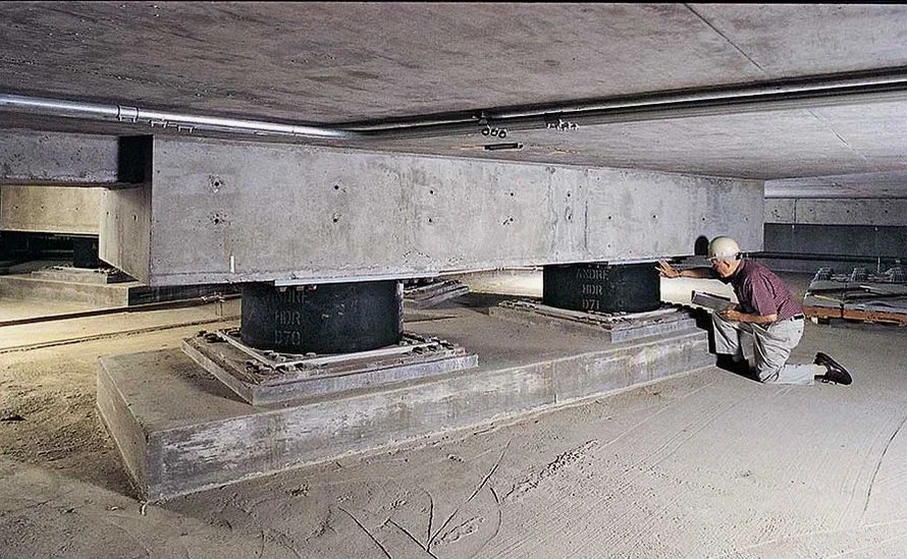
A diverse range of projects in Aberdeen demands comprehensive seismic input. High-profile energy infrastructure, such as gas processing terminals, subsea equipment testing facilities, and deep-water port expansions, all fall under high-consequence classifications due to their economic and environmental risk profiles. The city’s ongoing urban regeneration, including new residential blocks on reclaimed land and the retrofit of historic granite landmarks, requires tailored seismic assessment to preserve heritage while meeting modern safety standards. For particularly sensitive or high-value structures, such as data centres and hospital expansions, base isolation seismic design offers a sophisticated solution to decouple the superstructure from ground motion. Ultimately, the application of these services ensures that Aberdeen's growth is underpinned by a robust understanding of the natural forces that shape its landscape, safeguarding both its people and its critical economic engines for decades to come.
Common questions
Is Aberdeen actually at risk from earthquakes, and what is the typical seismic hazard level?
Yes, while the UK is a region of low to moderate seismicity, Aberdeen experiences occasional tremors, typically from intraplate stress release. The seismic hazard is quantified by a design peak ground acceleration (PGA) on rock of around 0.02g to 0.04g for a 475-year return period, as defined in the UK National Annex to Eurocode 8. This level is sufficient to require consideration for critical and ductility class structures, especially considering local amplification effects from soft soils.
What is seismic microzonation and why is it important for a city like Aberdeen?
Seismic microzonation is the process of subdividing a region into zones based on their specific ground motion response, considering local geology, soil stiffness, and topography. In Aberdeen, it is vital because the city spans hard metamorphic rock, stiff glacial till, and soft alluvial basins. This variation means an earthquake would shake the harbour area on saturated sands very differently from the granite hills of the west end, directly influencing foundation design and structural loads.
When is a soil liquefaction analysis required under UK regulations?
A soil liquefaction analysis is mandated under BS EN 1998-5:2004 when a site contains saturated, loose, cohesionless soils (such as sands and silts) and the design peak ground acceleration exceeds the threshold defined in the National Annex. In Aberdeen, this is triggered for many riverside and coastal developments. An assessment evaluates the factor of safety against cyclic liquefaction, post-earthquake settlement, and lateral spreading potential to determine the need for ground improvement or deep foundations.
What types of buildings in Aberdeen benefit most from base isolation seismic design?
Base isolation is particularly beneficial for structures where operational continuity is paramount after an earthquake, such as emergency response centres, hospitals, and critical energy control rooms. In Aberdeen, it is also highly effective for protecting valuable heritage structures with unreinforced granite masonry, where conventional strengthening would be invasive. By decoupling the building from ground motion, isolation significantly reduces inter-storey drift and floor accelerations, protecting both the structural fabric and sensitive internal equipment.